Category:
Craft
Why We Make Slowly
An honest look at where the weeks go between your order and your delivery, and why we won't rush them.

Tomas Reyes
Head of Workshop
When you order an Arlow piece, it is not sitting in a warehouse waiting for you. It does not exist yet. It is made for you, by hand, and that takes time.
We are asked about our lead times more than anything else, so here is an honest look at where those weeks actually go.
Week 1: Choosing the timber
Every piece starts at the timber rack. We select boards by hand for grain, colour and stability, and match them so the top of a table reads as one calm surface rather than a patchwork. Then the wood rests in the workshop for several days, adjusting to its temperature and humidity before a single cut is made.

Weeks 2–4: Cutting and joinery
Parts are cut slightly oversize, left to settle again, then brought to final dimension. Joints are cut and fitted by hand, one at a time. A mortise-and-tenon that is a fraction too loose will creak in five years; one that is too tight can split the wood. Getting it right cannot be rushed.
Rushing any step shows up later: as a wobble, a crack, or a surface that wears badly.
Weeks 4–6: Shaping and finishing
Edges are eased and surfaces sanded through several grits until they feel right under the hand. Finishes go on in thin coats, each one given time to cure properly before the next. This is the slowest part of the process, and the part you will feel every single day.
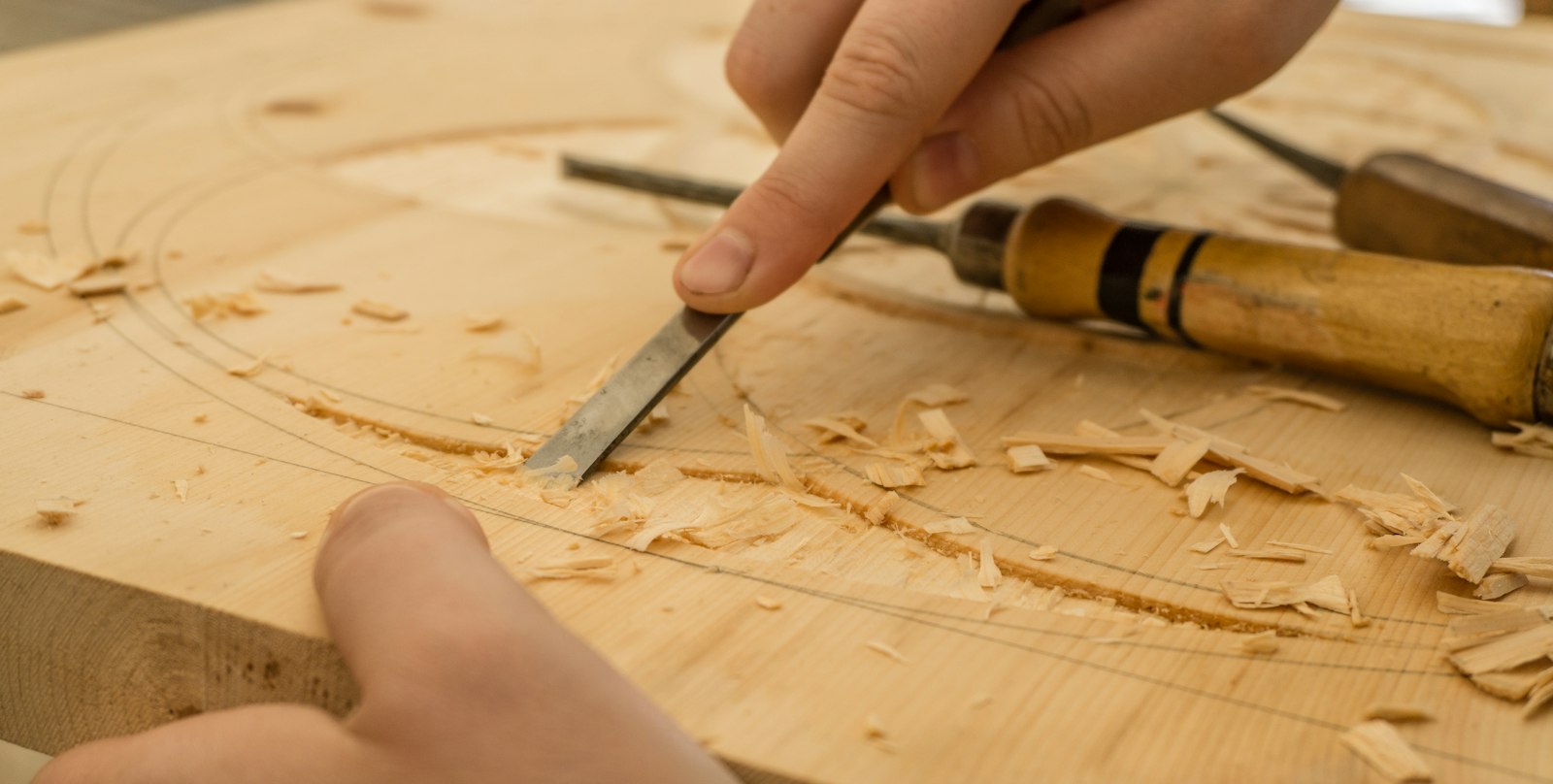
Why we will not speed it up
Making to order means we never guess at demand, never fill warehouses and never discount what did not sell. Every piece that leaves the workshop already has a home to go to.
Less waste: nothing is made that no one wants
Better materials: timber is chosen for your piece, not for a batch of hundreds
Longer life: furniture built this way is meant to outlast trends, and ideally the people who first buy it
We would rather you wait a few extra weeks for something you will keep for decades than receive something tomorrow you will replace in five years.
We always tell you the expected lead time before you order, and we will keep you updated as your piece moves through the workshop.


